
Editor's Note: Equipping infrastructure that "breathes," building a livable and tourist-friendly city, and deepening refined urban governance...... Urban renewal is an important means to improve urban quality and enhance people's well-being, and it is also a vivid practice of high-quality regional development. In recent years, our province has leveraged its own strengths, deeply cultivated urban construction, and advanced urban renewal according to local conditions, achieving remarkable results. This newspaper focuses on the exploration, practice, and development achievements of urban renewal across various regions of our province, showcasing the new urban landscape of Longyuan.
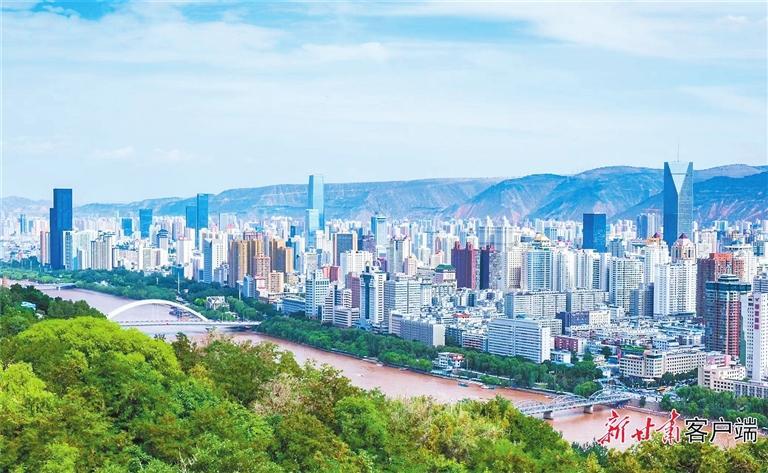
Lanzhou is changing day by day. Photo provided by the Publicity Department of the Chengguan District Committee of Lanzhou City
Lanzhou Old Residence has been revitalized and filled with happiness
This spring, in the family compound of Xinhua Printing Factory in Tuanjie Xincun Street, Chengguan District, Lanzhou City, there were many more renovation workers carrying tool bags coming and going.
Since the renovation of an old community in August last year, residents have seen the environment completely renovated and wanted to seize the opportunity to renovate their homes.
This old courtyard, built in 1987, features aging walls, outdated water and electricity pipelines, and chaotic greening in the park...... But the strong neighborhood atmosphere and mature living amenities make residents always cherish this home.
Entering the Xinhua Printing Factory family compound, construction materials are organized and orderly.
Li Qibin, Deputy Director of the Chengguan District Housing Security Center, set up his office at the construction site in the residential complex. "By the end of June this year, the renovation of the community will be completed. All 12 residential buildings will be fitted with exterior wall insulation and replaced the pipelines. At the same time, the community's landscaping will be rearranged, with new scenic paths and leisure seating." Li Qibin said.
Wei Hongyan, as a staff member and building director of Dingxinan Road Community in Tuanjie Xincun Subdistrict, participated throughout the early public opinion collection process for the renovation.
"First, this is a government-implemented benefit project, so no one has to spend out of pocket; Second, who doesn't want to live comfortably? Everyone hopes to use this renovation as an opportunity to simultaneously improve their quality of life and their spirit. During her visits, Wei Hongyan found that the residents were very eager to renovate.
Li Qibin explained that as the main urban area, Chengguan District has as many as 1,761 old residential communities built before 2000, and by 2025 alone, 832 projects have been renovated, benefiting over 100,000 households.
During the actual renovation process, residents have many questions about the scope of the renovation, construction standards, and the effects of the renovation. To address this, community staff patiently answered questions and resolved the public's confusion one by one.
Renovation is not a "one-size-fits-all" approach. "Chengguan District strictly follows technical standards, dividing renovations into three main sections: basic, comfortable, and upgraded." Li Qibin explained that prioritizing urgent issues such as water supply, heating pipelines, and roof waterproofing should be prioritized, followed by simultaneously advancing security monitoring and fire access improvements. On this basis, landscaping and lighting should be improved, and elderly-friendly facilities should be added wherever possible.
Li Qibin especially emphasized one bottom line: firmly adhere to not demolishing old buildings or cutting down old trees, ensuring the greening rate does not decrease.
"This is a great benefit for the people!" Tong Wei, who lives in Building 5 of the Xinhua Printing Factory Residential Compound and is a supporter of community renovation. "After the pipeline was relaid, the road became clean immediately. I heard there will be a dedicated parking area, so we no longer have to worry about grabbing parking spots." Tong Wei said.
Chengguan District has always adhered to the principle of "government leadership, market operation, and resident participation," turning this major livelihood project into a heartwarming "people's project."
The old courtyard is reborn. The anticipation and joy in the eyes of the long-term residents are the best testament to this heartwarming "People's Project."
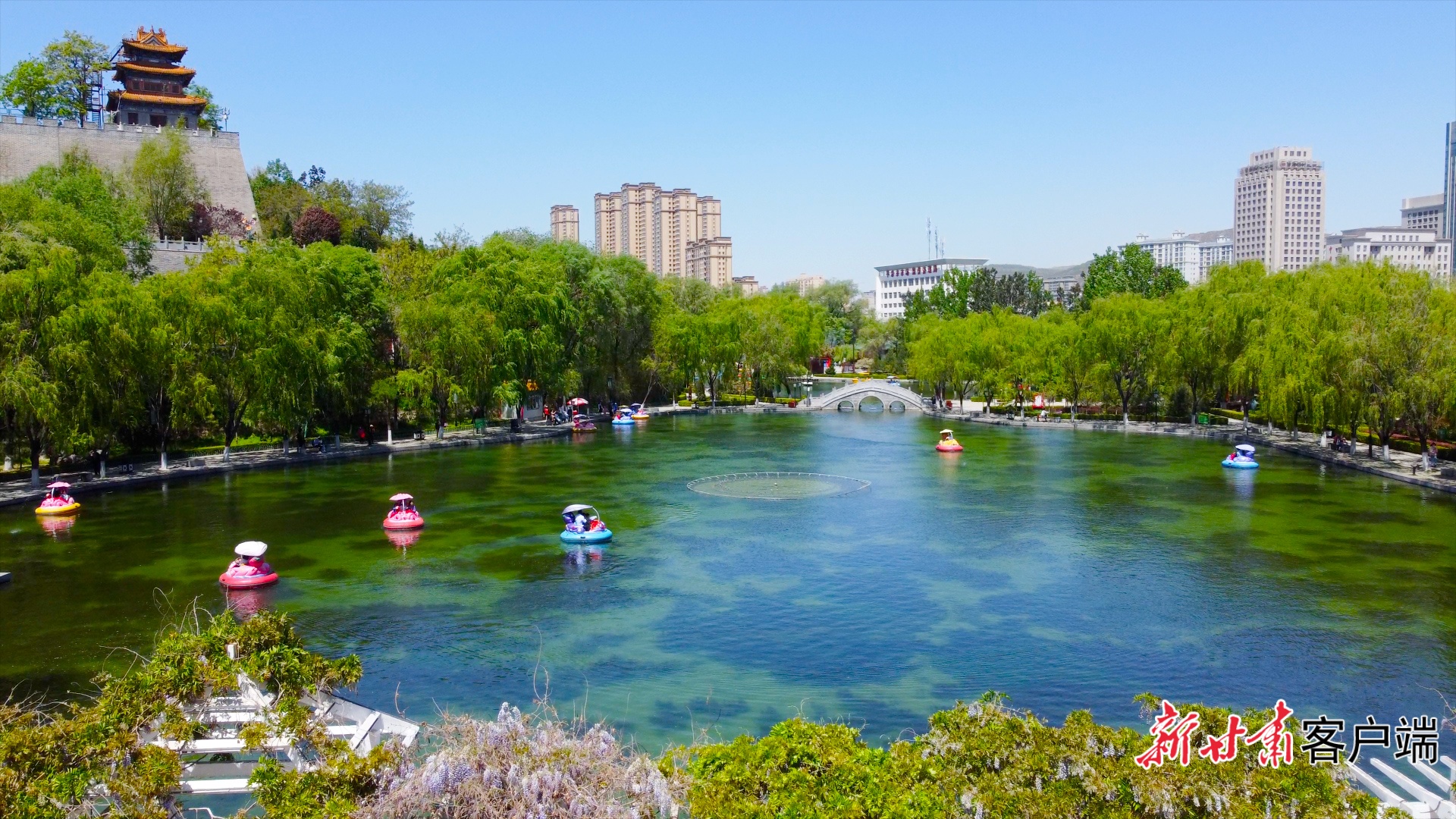
Liuhu Park, Pingliang City. Photo provided by Kongtong District Media Center
Pingliang's sponge city changes scenery with every step
Tian Liyuan, reporter for New Gansu · Gansu Daily
After a rainstorm, Pingliang resident Li Jianjun took his grandson to Ganlin Garden at their doorstep for a walk. Rainwater quietly seeps down the permeable bricks underground, and the sunken green spaces on both sides of the trail are lush with flowers and grass, with children running and playing on the dry surface.
"This used to be a wasteland, full of garbage, and when it rained, muddy and water would flow everywhere. Now, when I go out and enter the garden, the rain stops and the ground is dry, so much more comfortable. Li Jianjun's reflection reflects the renewal and transformation brought about by the construction of sponge cities in this Loess Plateau city.
Pingliang is located in the heart of the Loess Plateau in eastern Gansu, with a river valley terrain of 'two plateaus flanking one river,' which once caused the city to suffer from soil erosion and flooding.
In June 2022, after Pingliang was selected as one of the second batch of national demonstration cities for systematic and comprehensive sponge city construction, it has focused on "mountain protection, plateau stabilization, water management, and city enrichment," weaving the "sponge" concept into the fabric of urban renewal like embroidery.
Ganlin Garden was originally a corner of idle land, but now it is sunken green space, rainwater retention ponds, and pavilion corridors arranged in an orderly manner, not only absorbing surrounding water but also becoming a garden right at the doorstep of the villagers.
Pingliang has already "seized every opportunity" to build 36 such "pocket parks," and seven sponge parks, including Longyin Multifunctional Ecological Park, have successively opened, forming a dual-use "emergency and normal" energy regulation network.
In 45 old residential communities such as Longdong Pearl and Century Garden, permeable walkways, rain gardens, and rain buckets have been cleverly installed, transforming "problem communities" that were flooded with rain into "sponge communities" where you see greenery with every step and scenery changes.
The "substance" of urban renewal is even more substantial. All 25 roads in Pingliang have achieved permeable paving and full coverage of sunken green belts through 'micro-renovation,' preventing water accumulation during light rain and flooding streets during heavy rain.
To address the persistent problems of river valley-type cities, Pingliang has built a system of "decentralizing sources and integrating storage and drainage," newly renovating 66 kilometers of pipeline networks, and eliminating waterlogging points through a "one point, one policy."
Turning to the Jing River, an 11-kilometer ecological corridor and 57.6 kilometers of ecological shoreline stretch out in a winding manner. The gully consolidation and plateland protection project has accumulated ecological restoration covering 124 hectares, giving the former "Loess Ditch" a new lease on life.
The data is even more convincing: the area of sponge meeting standards in Pingliang's central urban area increased from 11.23 square kilometers to 30.06 square kilometers, with permeable ground area accounting for 46.8%, annual rainwater resource utilization of 267,000 tons, and the area selected for three consecutive years as a "China Sponge City Model," with 19 projects ranked among national model cases.
From countless "pocket parks" to permeable streets and alleys, from peaceful communities to the renewed Jing River, Pingliang has redefined urban renewal with "breathing" infrastructure—not just demolishing the old and building the new, but enhancing the city's resilience and resilience, and writing a tangible footnote for ecological protection and high-quality development in the Yellow River Basin.
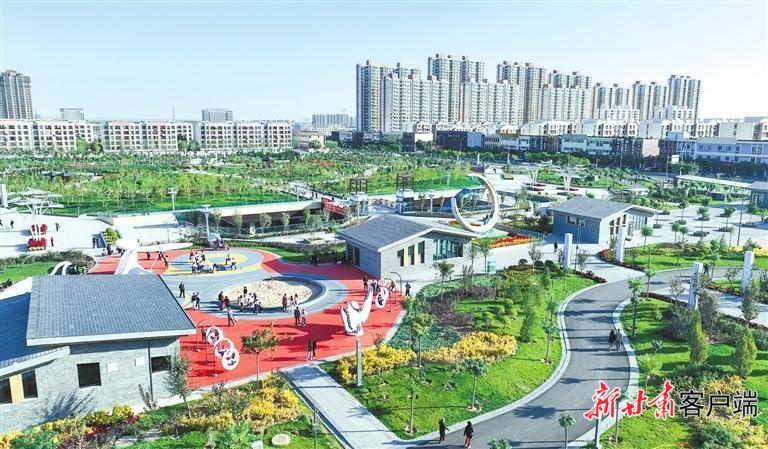
Chang'anli Community, Jinchang City. File photo
Jinchang Grassroots Governance Effectively Solves Problems
Xie Xiaoling, reporter for New Gansu · Gansu Daily
Recently, while walking through Chang'anli Community in Jinchuan District, Jinchang City, the reporter saw that the roads were smooth and clean, parking spaces were well organized, the "pocket park" was lush and green, and the convenience stations, senior day care centers, and children's activity areas were well distributed.
Who would have thought that today's livable and harmonious community was once a fragile urban-rural junction plagued by weak infrastructure and governance challenges?
Chang'anli Community was renovated from Xipo Village and Majiaan Village in Ningyuanbao Town, Jinchuan District. After the urban village renovation, old facilities were heavily lacking, public spaces were tight, and it was difficult to protect the rights of residents...... Many challenges were ahead.
How can it be broken?
The community has put in some 'embroidery work':
— Innovatively launched a "diversified financing" model, coordinating 114 million yuan to upgrade five residential community clusters as a whole;
— The project innovatively constructs a three-dimensional development model of "surface green park + underground civil air defense parking lot," completing the Tiantaiyuan Citizen Park and supporting underground works, adding 2,363 new public parking spaces;
— Weaving and improving the "15-minute living circle," with a cumulative 15-kilometer municipal pipeline network updated and renovated. Health service stations, convenience supermarkets, and transportation networks are all fully equipped, allowing the daily needs of all ages to be met right at their doorstep......
The most heartwarming thing is the thoughtful care for the elderly and the young.
The 1,800-square-meter Party-Mass Service Center opens at extended hours and offers staggered services, so residents are no longer in a hurry to handle affairs. At the daycare center, a 4-yuan warm breakfast, health check-up, and entertainment services make the elderly exclaim that they feel "comfortable." With two kindergartens, multiple daycare centers, and public childcare classes during winter and summer vacations, dual-income families no longer have to worry about childcare.
To address the resettlement difficulties faced by urban villagers, the local government has explored the "Five Integrations and Three Constancy" mechanism. The "dual-address" household registration allows over 1,000 residents to simultaneously have "dual identities" and rights—retaining collective village dividend rights while enjoying urban social security benefits, thus clearing the "bottleneck" of urban-rural integration.
Good grassroots governance depends on normal, long-term effectiveness. The community has established a collaborative governance framework among the residents' committee, owners' committee, and property management, implementing the "Heart-to-Heart for Governance" 1456 working method, dividing the jurisdiction into micro-grids, with grid members regularly visiting and inquiring about public needs. How to renovate communities and manage the environment—residents sit together to discuss and handle them, achieving 'small issues don't leave the grid, difficult ones are covered by the community,' and residents' demands are 'answered and every matter can be closed.' Simultaneously follow up on safe construction and civilized cultivation, regularly carry out volunteer services and civilized guidance, shifting community governance from "passive response" to "active service."
In October 2022, Chang'anli Community was selected as a national pilot for complete community construction and became a national model case.
The transformation of Chang'anli Community is a vivid reflection of Jinchang's deep commitment to refined urban governance. Now, Jinchang is gradually replicating and promoting the pilot's experience, using 'embroidery skills' to manage every detail of the city, allowing more people to feel happiness right at their doorstep, and making 'refined and livable' truly the city's most striking foundation.
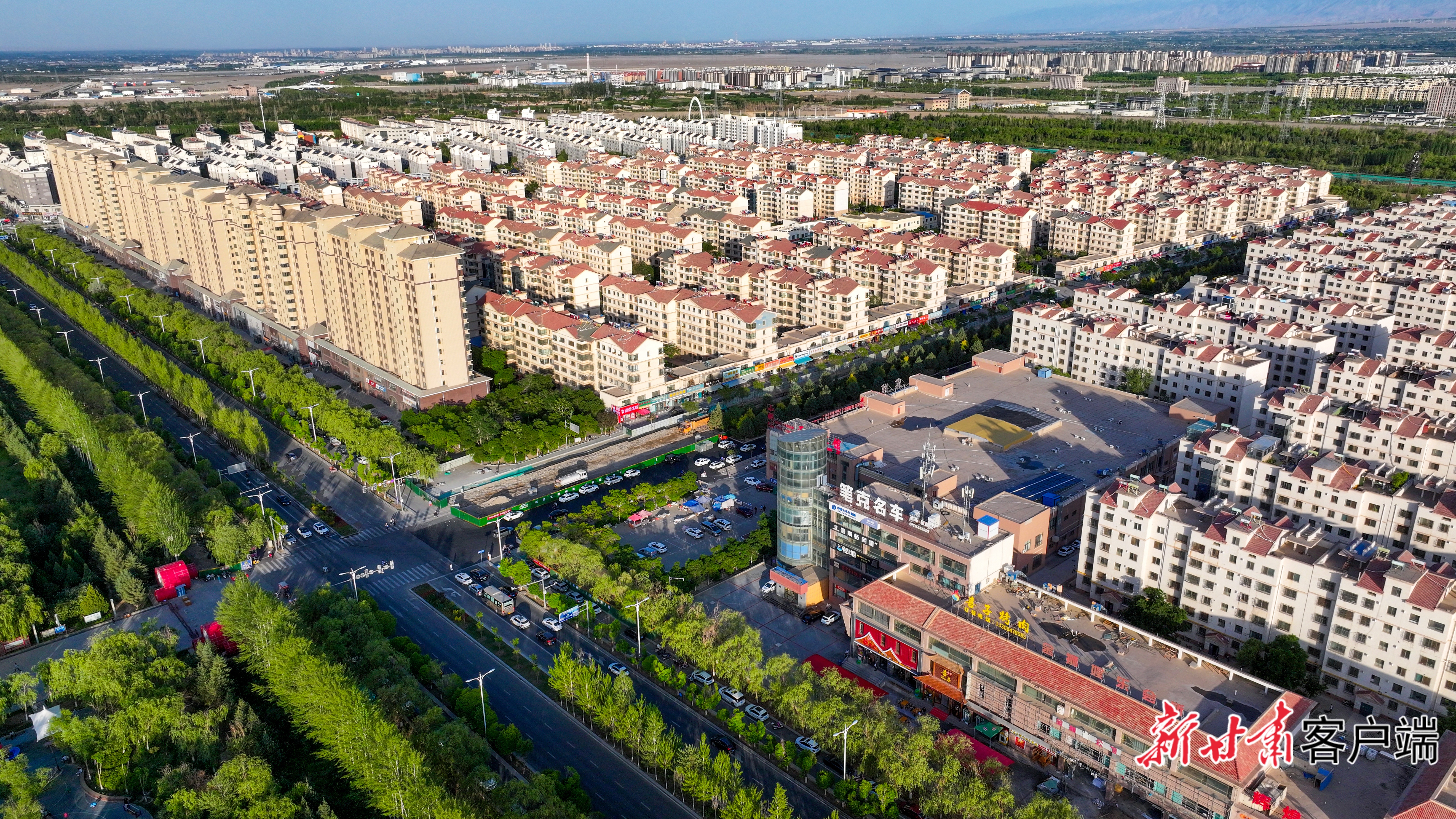
Jiayuguan City Mingzhu Area. Mao Fu, correspondent for New Gansu · Gansu Daily
Jiayuguan pipeline network renovation benefits residents and warms hearts
New Gansu·Gansu Daily reporter Yu Xiaoming
Zhang Yuzhen, who lives in Zixuan Community, Gangcheng Subdistrict, Jiayuguan City, takes a leisurely walk along the newly renovated road after dinner. The smooth and open road surface is neatly divided, with clear boundaries between vehicle and pedestrian zones, each following its own path in an orderly manner. Looking at the safe and comfortable travel environment before her, her face was full of smiles, and deep down she was especially happy.
"I used to worry every winter, afraid the pipes would freeze and crack again." In Zhang Yuzhen's memory, winters in the Mingzhu area were always accompanied by the "rushing repairs."
The five communities built in different periods have long time spans and unreasonable construction plans, with elevation differences of over 10 meters in each area, and share an underground pipeline network running through the five districts. Pipelines are like "intestinal obstruction"—one blockage affects the entire area.
With the continuous development and expansion of the city, the population living in the Mingzhu area has gradually increased. However, after decades of use, water supply and drainage networks have obvious issues of leakage and leakage. Old pipe networks meet lower design standards and smaller pipe diameters, making it difficult to meet the water and drainage needs of densely populated areas.
In 2024, the Jiayuguan Municipal Bureau of Housing and Urban-Rural Development decided to implement the pipeline network upgrade and renovation project in the Mingzhu area of Jiayuguan City. The construction team carried out drainage upgrades in five residential communities within the area, laying new pipelines under municipal roads around the neighborhoods, and segmentally connecting the internal pipelines to main pipelines.
"Not long ago, the water pipe in the neighboring unit leaked, and the repair team worked by the roadside. It didn't disturb residents' walks, nor did they dig up the neighborhood into a mess." Zhang Yuzhen said that after the renovation and upgrade, the roads have become not only smooth and smooth but have also completely resolved the frequent maintenance issues that once troubled residents.
Tuo Hui, Deputy Director of the Jiayuguan Urban Construction Project Management Center, explained that the new pipeline network is laid along municipal roads, not only solving the problem of poor water flow caused by elevation differences, but also moving the maintenance area from inside the community to the public area.
In 2025, Jiayuguan City will build and renovate 80.63 kilometers of water supply pipelines, 80.52 kilometers of sewage pipelines, and 26.92 kilometers of heating pipelines. Projects such as upgrading the Mingzhu area pipeline network and addressing urban pipeline shortcomings (Phase III) will be implemented and have shown results.
To address the problem of water accumulation during the rainy season, Jiayuguan City has also established a drainage and flood prevention system of "source reduction, pipeline network discharge, and emergency response to excess standards," constructing and renovating 31.44 kilometers of rainwater drainage pipelines and 14.21 kilometers of flood drainage channels.
"Urban renewal requires both 'appearance' and 'substance.' We innovatively adopted a 'one-time excavation, multi-pronged renovation' model, simultaneously advancing projects such as upgrading the thermal pipeline network during pipeline network renovation." Li Chao, Deputy Director of the Jiayuguan City Housing and Urban-Rural Development Bureau, introduced.
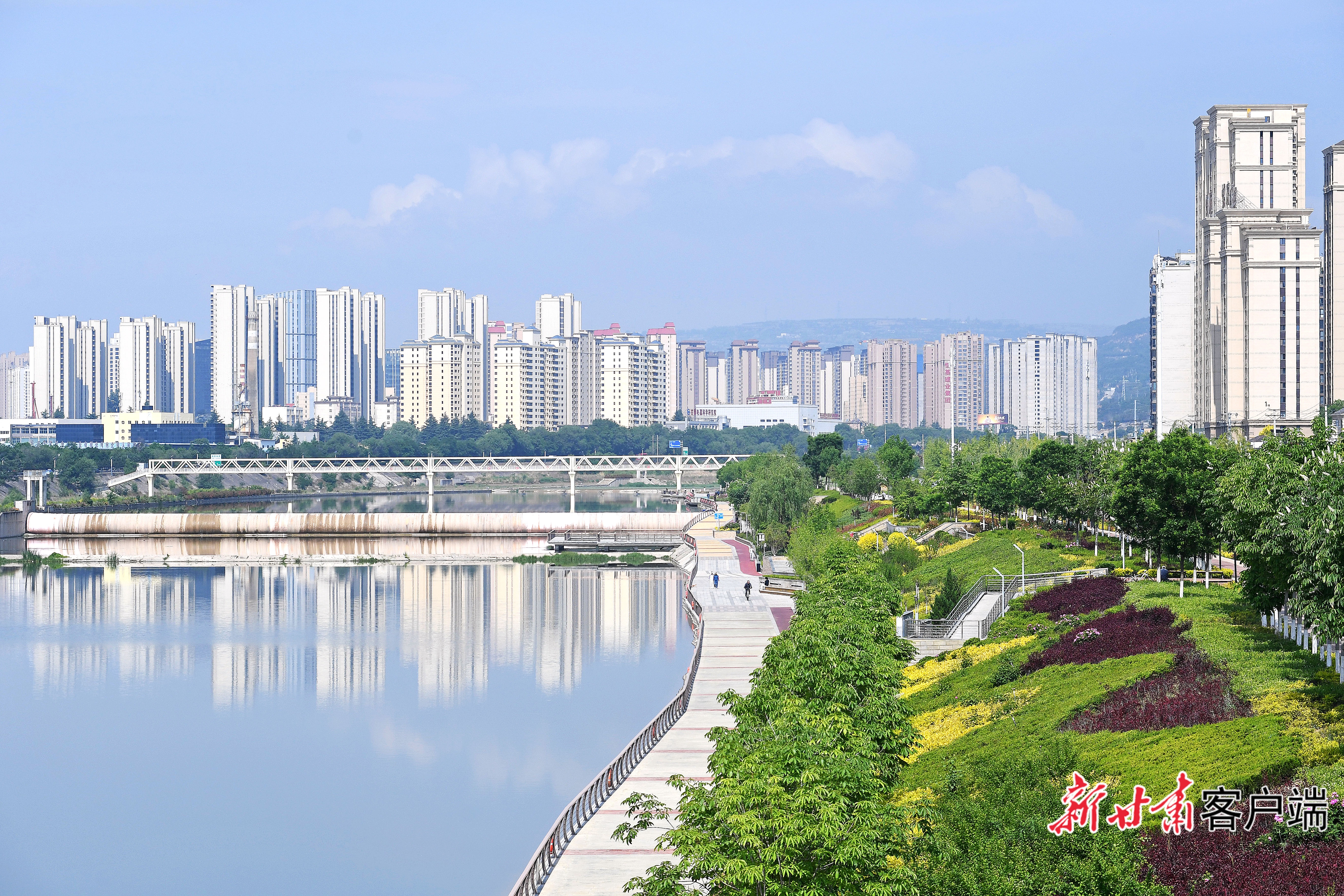
Tianshui Jiehe Scenic Park. Sun Zhen, correspondent for New Gansu · Gansu Daily
The smoke and water of Tianshui and Qinzhou's ancient charm endure
New Gansu·Gansu Daily reporter Antong
Tianshui, known as the "Hometown of Emperor Xi," is a thousand-year-old ancient city known not only for its rich natural landscapes but also for its profound historical and cultural heritage. Here, diverse cultures such as Fuxi culture and Dadi Bay prehistoric culture blend and accumulate, and the cultural roots engraved in history have long been integrated into the daily lives of ordinary people.
At dusk, the riverside scenic line and the cultural square along the river are bustling with activity. Here, as the accompaniment plays, citizens dance to the beat, their figures moving lightly, while the strings play melodiously. The melodious Qinqiang singing instantly draws cheers from the opera fans.
As Tianshui advances urban renewal and builds a livable and tourist-friendly city, such vibrant cultural scenes are continuously staged in public cultural venues across urban and rural areas, making the cultural prosperity of this thousand-year-old city visible and tangible.
"In recent years, we have focused on improving the quality and efficiency of public cultural services, using foundational foundations, benefiting the people, cultural heritage inheritance, and digital empowerment as key approaches, significantly enhancing the city's cultural soft power and the sense of gain for the public." Li Xingjie, Deputy Director of the Tianshui Municipal Bureau of Culture and Tourism, told reporters that Tianshui has created distinctive brands such as "Songs of the Earth" and "Four Seasons Village Gala," holding over 600 rural opera performances and more than 500 nationwide reading events annually, extending cultural benefits to every corner of urban and rural areas.
"Public culture cannot be confined within museum walls; it must go out and come alive to truly reach the people." said Zhu Yaoyu, director of Tianshui City Library.
In recent years, Tianshui City Library has partnered with multiple municipal departments and communities to create a multi-domain coordinated reading promotion model. Brands such as "Learn Chinese Characters in the Library" and "Intangible Cultural Heritage Craft Inheritance Experience Classes" have been well received by readers, and the "Excellent Traditional Culture Enters Campuses" project has also entered many primary and secondary schools across the city.
The 24-hour smart study room set up at Zhangjiachuan County Library is open 24 hours a day, and after closing, readers can enter by scanning a valid card. These new types of public cultural spaces rooted in the community's living circles have now been established citywide, with 79 such spaces now fully covered by a network of public cultural facilities at the municipal, county, township, and village levels, truly bringing cultural services right to the doorsteps of the people.
For longtime opera fan Li Baoguo, nothing was happier than watching the Northwest Opera Showcase right at his doorstep for ten days. "It's rare to catch a performance last year, and in recent years I've been able to watch it for several days in a row—it's truly a great experience." This event, which ignited nationwide cultural enthusiasm, achieved 600,000 offline participation and over 37 million online views in its second edition.
Chen Xi, a Xi'an tourist visiting Tianshui, was pleasantly surprised at the intangible cultural heritage market. "After listening to the melodious Qinzhou tunes, I even found exquisitely crafted carved lacquer bookmarks. It turns out Tianshui not only has beautiful mountains and waters and spicy hot pot, but the intangible cultural heritage hidden in the streets and alleys is even more flavorful." ”
Since the beginning of this year, Tianshui has held three intangible cultural heritage exhibitions, markets, and food carnivals, bringing traditional folk crafts deeply hidden into the spotlight and integrating into cultural tourism scenes, revitalizing ancient cultural heritage amid the vibrant atmosphere. (Reporter Wang Yuyu)